
Australian vs Ethiopian Opal Rings: Which Suits UK Wear?
Australian vs Ethiopian Opal Rings: Which Suits UK Wear?
Opals are not all the same. A ring set with a solid Australian black opal can shrug off a British winter commute and the odd splash at the sink. A vivid Ethiopian crystal opal may give you startling brightness, but it expects a different kind of care. The choice is less about which is “better” and more about how you live with a ring on your hand.
The short answer for UK ring wearers
If you want one opal ring for everyday wear — engagement, wedding, or a ring you rarely take off — Australian opal is usually the safer choice. Solid Australian opal is stable, hard-wearing for a gem of its type, and generally untroubled by water. Ethiopian opal can be worn in a ring, but many stones are hydrophane: they absorb water, oils and chemicals. That makes them better suited to occasional wear or to a carefully protected setting.
That does not mean Ethiopian opal is “bad”. It means it has different rules. A UK wearer who takes a ring off before washing up, swimming, showering or applying hand cream can wear Ethiopian opal happily. A wearer who wants to forget the ring is there should lean Australian.
Also check what you are buying. Solid opal is a single piece of natural opal. A doublet has a thin layer of opal glued to a backing. A triplet adds a clear cap on top. Doublets and triplets can look wonderful, but the glue makes them unsuitable for soaking and they need gentler treatment than solid stones.
Durability: what daily life does to an opal
Opal sits around the softer end of jewellery gems. It is not as hard as diamond, sapphire or quartz, and it can scratch or chip if it takes a direct knock. In a ring, the stone is exposed to car doors, shopping bags, gym equipment, gardening and the general clumsiness of hands. That matters more than the country of origin.
Australian opal tends to be the steadier option. Much of it comes from sedimentary host rock and is non-porous, so it copes with humidity, rain and normal hand washing without drama. It can still craze — fine cracks that develop inside the stone — if it is exposed to sudden heat or extreme temperature changes. A hot radiator, a hair dryer or a dishwasher is not a friend to any opal.
Ethiopian opal is often more porous. Some stones are fragile, and because they absorb moisture they can react to soaps, lotions and oils. A stone that looks perfectly clear today can turn cloudy, dull or patchy after contact with water or hand cream. In some cases, repeated wetting and rapid drying can worsen small fractures or lead to cracking. Many Ethiopian opals behave well, but the risk is real enough that you should treat them as careful-wear stones rather than everyday beaters.
Australian opal is not indestructible either. It can still scratch, chip and craze. The difference is predictability. Its default response to a rainy Tuesday, a forgotten hand wash or a damp cloakroom is usually nothing at all. For UK wearers, that predictability is the real advantage.
Water, weather and the UK lifestyle
British weather is not extreme, but it is persistent. Rain, damp air, central heating, hand sanitiser, washing-up liquid and winter hand cream are all part of normal life. Australian opal generally takes this in its stride. Ethiopian opal may not.
If you wear an Ethiopian opal ring, build a habit of removing it before showers, baths, swimming, washing up, cleaning, gardening and applying lotion, perfume, sunscreen or hairspray. Do not store it in a bathroom. If it does get wet, blot it gently and let it air-dry away from direct heat. Never use a hair dryer, radiator or sunny windowsill to speed things up.
- Australian opal: Usually fine with normal hand washing and humid UK air. Avoid sudden heat, chemicals and ultrasonic cleaners.
- Ethiopian opal: Keep away from water, oils and chemicals. Dry gently if wet. Accept that it may change appearance temporarily or permanently after contact with moisture.
Settings: the unsung hero of opal ring safety
A protective setting can make more difference than origin. A high, four-claw solitaire exposes the opal’s edges to every door frame and shopping bag. A bezel or semi-bezel surrounds the stone with metal, reducing the chance of a direct knock. For Ethiopian opal, a full bezel is often the sensible choice. For Australian opal, a low-profile setting with sturdy claws is usually enough, though a bezel is still the safest option for daily wear.
Consider the height of the ring too. A low-set opal is less likely to catch on clothing or bang against a desk. If you are choosing an engagement ring, try on the setting with your everyday coat, gloves and handbag strap in mind — not just under jewellery-shop lighting.
Solid, doublet or triplet: read the label
Origin is only one question. Construction is the other. Solid opal is a single piece of natural opal, cut and polished. A doublet is a thin slice of opal glued to a backing, often ironstone or black potch. A triplet adds a clear quartz or glass cap over the opal. Doublets and triplets can offer a dramatic look for less money, but they contain glue. Water, heat and solvents can eventually weaken that glue, causing cloudiness or lifting. They are best for occasional wear, not for a ring you never remove.
Ask the seller directly: Is this solid, doublet or triplet? Is the opal hydrophane? What is the origin? A good seller will know. If the answer is vague, walk away.
How to choose by lifestyle
- Everyday ring, rarely removed: Choose solid Australian opal in a bezel or low-profile setting. It is the closest thing to a low-maintenance opal ring.
- Engagement or wedding ring: Australian black or dark opal is the traditional premium choice. Ethiopian opal can work if you choose a protective setting and are willing to remove it for water and creams.
- Occasional statement ring: Ethiopian crystal opal offers spectacular brightness and often larger stones for the money. Wear it for dinners, parties and dry events, then put it away.
- Active hands, gym, gardening, swimming: Neither opal is ideal. If you must, solid Australian opal in a full bezel is the safer bet; otherwise choose a different gem for these activities.
- Budget-conscious buyer: Ethiopian opal or an Australian white/crystal opal gives more size for your budget. Doublets and triplets can be beautiful, but treat them as delicate.
Care rules that apply to both
- Put your opal ring on last, after perfume, lotion, hairspray and makeup.
- Remove it before washing up, showering, swimming, cleaning, exercising or gardening.
- Wipe it with a soft dry cloth. For solid Australian opal, a quick dip in lukewarm water with a drop of mild soap is usually fine; dry immediately. For Ethiopian opal, avoid water and use a dry cloth only.
- Never use ultrasonic or steam cleaners, bleach, ammonia, acetone, vinegar or chlorine.
- Store it separately in a soft pouch or lined box so harder gems do not scratch it.
- Avoid sudden temperature changes. No radiators, hair dryers or hot car dashboards.
Value and beauty: what are you paying for?
Australian black opal is rare, especially with a dark body tone and bright play-of-colour. That rarity commands high prices. Australian white and crystal opals can be more affordable but still carry the stability many UK wearers want. Ethiopian opal often delivers vivid colour and larger sizes at lower prices, but it comes with more care and less resale prestige. Neither is a fake or a lesser gem; they are simply different materials with different strengths.
Buy the opal for the life you actually live, not the life you imagine when you are standing in the jewellery shop.
Final verdict
For a UK wearer who wants one opal ring for daily wear, solid Australian opal in a protective setting is usually the smarter choice. It handles damp weather, hand washing and the general chaos of British life with far fewer rules. Ethiopian opal is stunning, and perfectly wearable, but it asks you to pay attention: no showers, no washing up, no hand cream, no prolonged damp storage. If you are happy to treat it like a delicate guest, it can be a
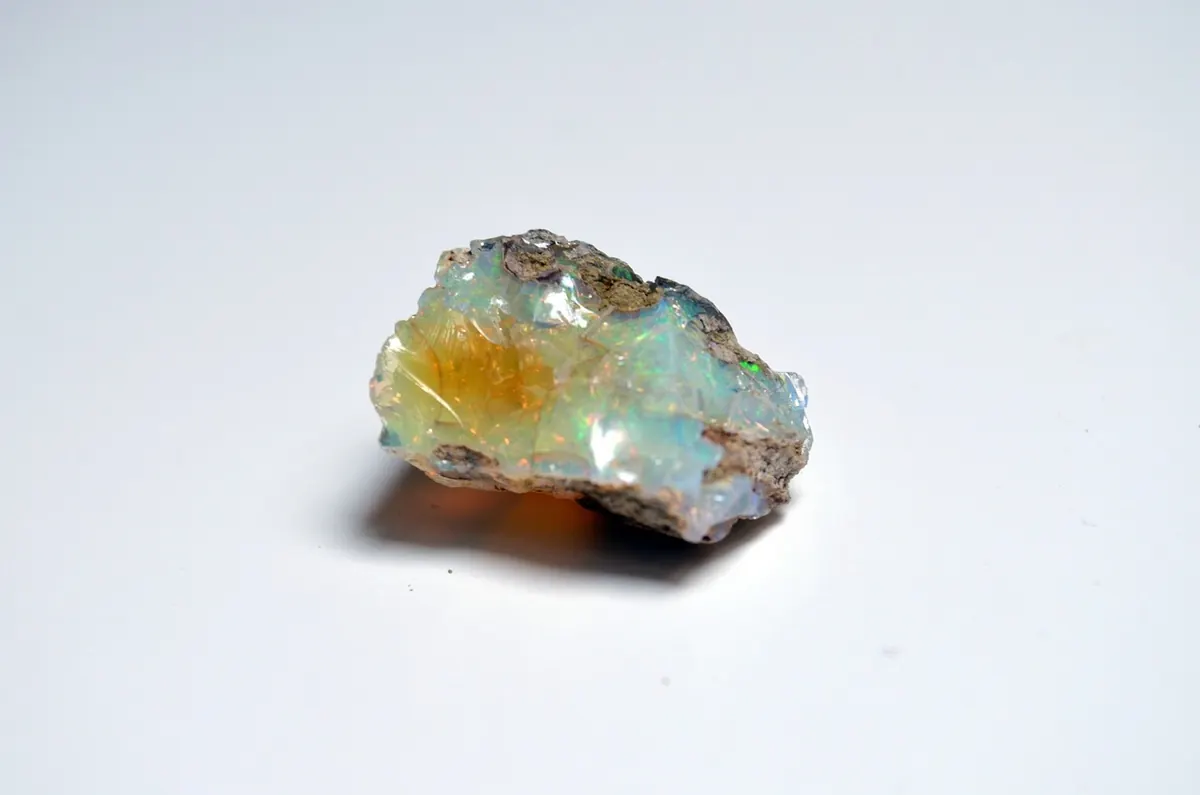
Photo: Varga / Pixabay