
Opal Bracelet Styles Compared: Tennis, Bangle and Beaded
An opal bracelet is a small piece of theatre on the wrist. Tilt your hand towards a window and the stone answers with green, then pink, then a flash of blue that vanishes as soon as you look straight at it. The catch is that opal is softer than most gemstones people wear daily — roughly 5.5 to 6.5 on the Mohs scale, softer than quartz — so the style you choose matters as much as the stone itself. A bracelet lives on the part of the body that bumps doorframes, types, washes up and reaches across tables. Here is how the three most popular formats compare.
The three styles at a glance
- Tennis bracelet: a continuous line of matched stones linked by metal, designed to drape and move with the wrist. Maximum sparkle, maximum exposure to knocks.
- Bangle or cuff: a rigid circle, oval or open-ended curve, often built around one hero opal. Holds its shape, sits slightly proud of the wrist, takes impact directly.
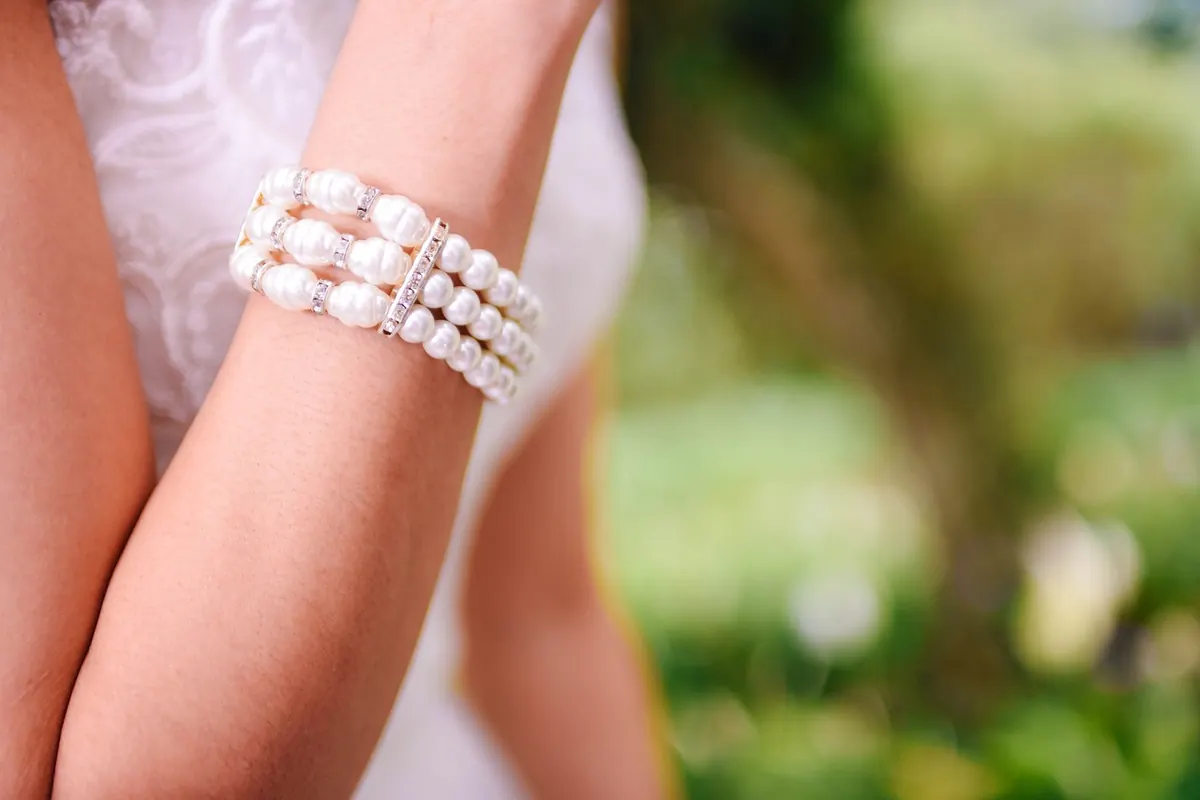
- Beaded: strung opal beads, sometimes mixed with metal or gemstone spacers, on elastic or a clasped wire. Softest against the skin, most casual, easiest to adjust.
Tennis bracelets: line, light and a little caution
A tennis bracelet works because every stone is calibrated to the same size and set in a linked row, so the whole piece reads as one ribbon of colour. With opal, that effect depends on finding a set of cabochons with similar body tone and comparable play-of-colour. Matching opals is slower work than matching diamonds, which is one reason a good opal tennis bracelet can cost more than the stone count suggests.
What to look for in the setting
Claw settings show off an opal beautifully and snag on absolutely everything. For a bracelet, favour a bezel or semi-bezel: the metal wraps the girdle of the stone, protecting the edges that would otherwise chip against desk edges and car doors. Check that the links articulate freely — a stiff bracelet sits like a shackle and puts leverage on the settings. Also check the clasp: a box clasp with a figure-eight safety catch is the sensible choice, because a bracelet that opens over a tiled floor is a hard lesson.
Comfort and sizing
A tennis bracelet should sit just below the wrist bone and stay there. If it slides down over the base of your hand, it will rotate, flip and knock against things all day. Adding or removing a link is usually straightforward on a well-made piece, so buy for fit rather than hoping it settles.
Bangles and cuffs: structure and protection
Because a bangle has no moving parts, it can be built around a single, generous opal — a cabochon with a full face of colour rather than a row of small stones. That makes it the best format for anyone who wants one striking gem rather than sparkle spread thin. The trade-off is physics: a rigid ring takes a knock and passes it straight to the setting.
Choose a bangle that slips over the knuckles without force but does not rattle. An oval shape generally fits more comfortably than a perfect circle, because wrists are wider than they are deep. If your knuckles are larger than your wrist, or your hands are stiff in the morning, a hinged bangle with a clasp is far easier to put on than a solid one, and a slim open cuff can be gently adjusted.
Look for a solid opal set low in a bezel with a decent metal rim. Doublets and triplets — thin layers of opal bonded to a backing — are more affordable but more vulnerable to water, abrasion and heat, and they are best kept for cuffs that come off before the washing-up.
Beaded bracelets: comfort, colour and stacking
Opal beads give you colour in the round. Each bead catches light differently, so the overall effect is softer and more textured than a faceted line of stones. Beads are usually polished into spheres of perhaps 4 mm to 8 mm, and because they are small, individual beads are rarely as vivid as a good cabochon — the charm is in the accumulation.
Elastic or clasped?
Elastic is quick, comfortable and forgiving of sizing, but it stretches, perishes and eventually fails. If you go elastic, ask for silicone-lined beading elastic rather than plain thread, and plan to have it restrung roughly once a year or as soon as it feels loose. A wire-strung bracelet with a proper clasp lasts longer, though it will need occasional restringing as the wire kinks.
Size a beaded bracelet at your wrist measurement plus about a centimetre, so it sits with a little slack but does not hang into your palm. Beaded styles are the easiest to layer — a fine beaded opal with a plain gold bangle is a good pairing — but keep hard metal away from opal beads where they will rub, because grit and metal edges will dull a polished surface over time.
Matching style to occasion and budget
- Everyday wear: beaded, or a low-set bangle in a bezel. Both cope with desk work and coffee runs.
- Work and smart daywear: a slim bangle or a fine beaded strand reads polished without shouting.
- Evening and occasions: a tennis bracelet has the presence for it, provided you put it on last and take it off first.
- Tightest budget: beaded styles and slim cuffs generally give the most opal per pound. Triplets and doublets cost less than solid opal but need gentler handling.
- Widest budget: a matched opal tennis bracelet, where the cost sits in the setting, the matching and the metal.
Caring for an opal bracelet
Opal contains water within its structure, and some material — particularly Ethiopian opal — is hydrophane, meaning it can absorb liquids and temporarily cloud or change appearance. Treat every opal bracelet the same way: put it on after perfume, hairspray and moisturiser have dried, and take it off before showering, swimming, washing dishes or gardening.
- Wipe with a soft, dry cloth. Avoid ultrasonic cleaners, steam cleaners and harsh chemicals.
- Store separately in a soft pouch or a lined compartment so it cannot rub against harder stones.
- Check settings and restringing twice a year; a loose stone is cheaper to tighten than to replace.
- Keep it away from sudden temperature changes and prolonged direct sun.
If a piece is valuable to you, have it assessed and insured properly through a qualified jeweller, and keep the paperwork with your other documents.
Choosing between the three
- Decide how often you will actually wear it, and be honest about your habits.
- Choose the format that suits that life: beaded for daily, bangle for regular but careful, tennis for occasions.
- Prioritise the setting over the stone size — a well-protected modest opal outlasts a showy exposed one.
- Get the fit right, then have links, elastic or clasps adjusted rather than putting up with a poor fit.
- Buy the piece you will reach for, not the one that photographs best. A bracelet only earns its keep when it is on your wrist.
Photo: Photosbychalo / Pixabay